
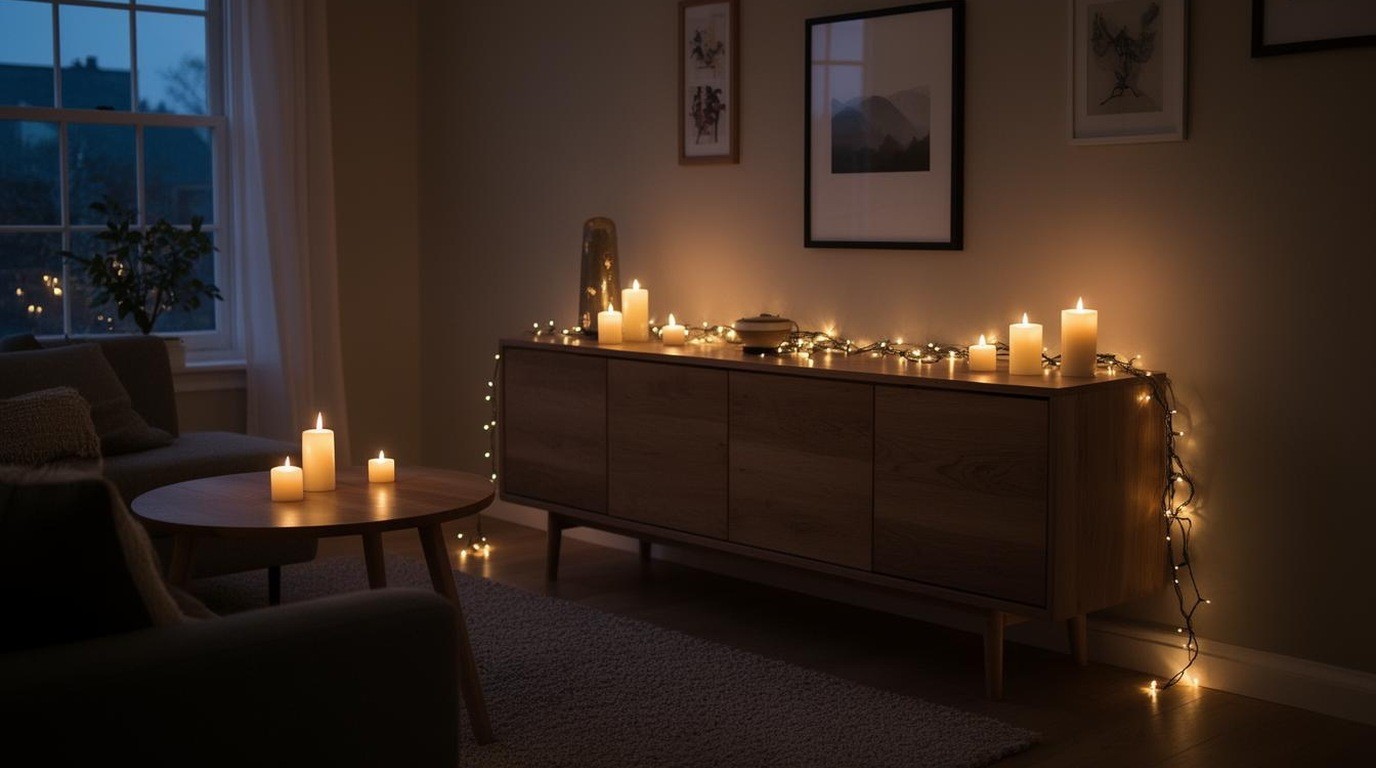
Lighting does more to shape a holiday party than almost any other choice. Bright overhead lights can make a room feel like an office, while a few low, warm sources can make the same space feel intimate and welcoming. Most hosts reach for candles first, but LED alternatives have improved a great deal, and they offer advantages in certain rooms. The best choice depends on the room, the people and how much care you can give to the setup through the evening.
This guide compares candles and LED lighting for holiday parties, explains how to layer light for atmosphere and sets out the safety points that matter most. It describes general characteristics and does not recommend specific products. Always follow the instructions on the packaging, and check the rules for open flames in rental properties or shared buildings.
Short answer: candles add a natural glow, while LED alternatives offer warmth without an open flame. Layer warm light at different heights, and use candles only where an adult can watch them.
In this guide
Why light changes the room
The color and placement of light affect how people feel. Warm light, with a yellow or amber tone, tends to feel relaxed and cozy. Cool light, with a blue or white tone, can feel bright and energetic, which suits a working kitchen or a busy entryway. Most parties benefit from a mix, with warm light in the main areas and brighter light where guests need to see.
Light placed low and at different heights creates depth. A single bright lamp in the middle of a room flattens the space, while several small sources at different levels make it feel layered. Think of light as furniture: arrange it so that it draws the eye and creates pools of warmth.

Candles: warmth and scent
Candles give a flickering, natural glow that many guests find flattering. They are inexpensive, and a cluster of pillar or taper candles can transform a table. Unscented candles are the safest choice for guests with sensitivities, and a light scent can add a seasonal touch if the room is well ventilated.
The downsides are the flame and the need for attention. Candles can drip, burn down unevenly and create a fire risk if they are left unattended or placed near fabric. Keep them in stable holders, trim the wick as the label suggests and blow them out before anyone leaves the room. Never leave a lit candle in a room with no one present.
LED alternatives: safety and convenience
LED lights offer warmth without an open flame, which makes them practical for rooms with children, pets or heavy traffic. Battery-powered candles, fairy lights and small lamps can be placed on shelves, mantels and high surfaces where a real flame would be risky. Many have timers, so they switch on and off without someone needing to remember them.
LED light is not identical to candlelight. The flicker of a real flame is hard to copy, and some LED candles look too uniform on close inspection. Choose LED lights with a warm color temperature, and check that the batteries are easy to replace. Keep the cords of plug-in lights away from walkways and check that outlets are not overloaded.
| Feature | Candles | LED alternatives |
|---|---|---|
| Glow | Natural flicker | Steady, though some mimic flicker |
| Fire risk | Yes, needs supervision | Low, no open flame |
| Scent | Available | Not available |
| Upkeep | Trimming and replacing | Battery changes or charging |
| Best in | Dining tables with adult supervision | Shelves, kids’ rooms and busy spaces |
Layering the light
A simple plan works well for most parties. Use warm LED lights to create a base glow in the main room, keep candles on the dining table where adults can supervise them and add a few small lights in the entryway and along the path to the kitchen or bathroom. Dim the overhead lights, but keep enough brightness for guests to move safely.
Our guide to table linens and centerpieces shows how to combine candles with cloth and greenery, and the last-minute party checklist covers the timing for setting up lights before guests arrive.
Safety checks before guests arrive
Walk through the room and check every light source. Keep candles away from curtains, decorations and the edges of tables. Check plug-in lights for damage, and keep cords out of walkways. Make sure every candle has a stable holder and that matches and lighters are stored out of children’s reach. If you are in a rental or a shared building, check the rules on open flames before you light anything.
Timers and dimmers
A timer on a plug-in light saves time and keeps the room bright when guests arrive. Set the lights to turn on before the first guest, and switch them off after the last one leaves. A dimmer on the overhead light lets you lower the level in the evening without changing the atmosphere completely. Check that the dimmer is compatible with the bulbs in use, since some LEDs do not respond well to older dimmers.
Lighting the entrance
The first impression starts at the door. Place a few lights along the path or steps so guests can see where they are going, and keep the entrance clear of cords and clutter. A lantern or a battery light by the door adds a welcoming glow. Check that outdoor lights are rated for outdoor use, and that any cords are protected from moisture.
The short version
Layer warm light at different heights to make the room feel welcoming. Use candles on the dining table where they can be supervised, and choose LED lights for shelves, entryways and rooms with children or pets. Check every source for safety, keep cords tidy and never leave a flame unattended. The right light makes guests linger, and that is the true measure of good party lighting.
Takeaways
- Layer light at several heights for depth.
- Use LED lights where children or pets are present.
- Never leave a lit candle unattended.
Planning the table too? Our guide to table linens and centerpieces shows how to finish the look on a budget.